DevSecOps for Developers

Half-day intensive workshop for developers focused on security throughout the whole development lifecycle, including an AI-native approach. We cover how to run practical security workflows even without a dedicated security team, how to automate checks in CI/CD, and how to address container and cloud risks.

Participant rating 4.7/5Groups up to 20 participantsHalf-day training
DevSecOps for developers corporate training

Address risks systematically and early, not in production

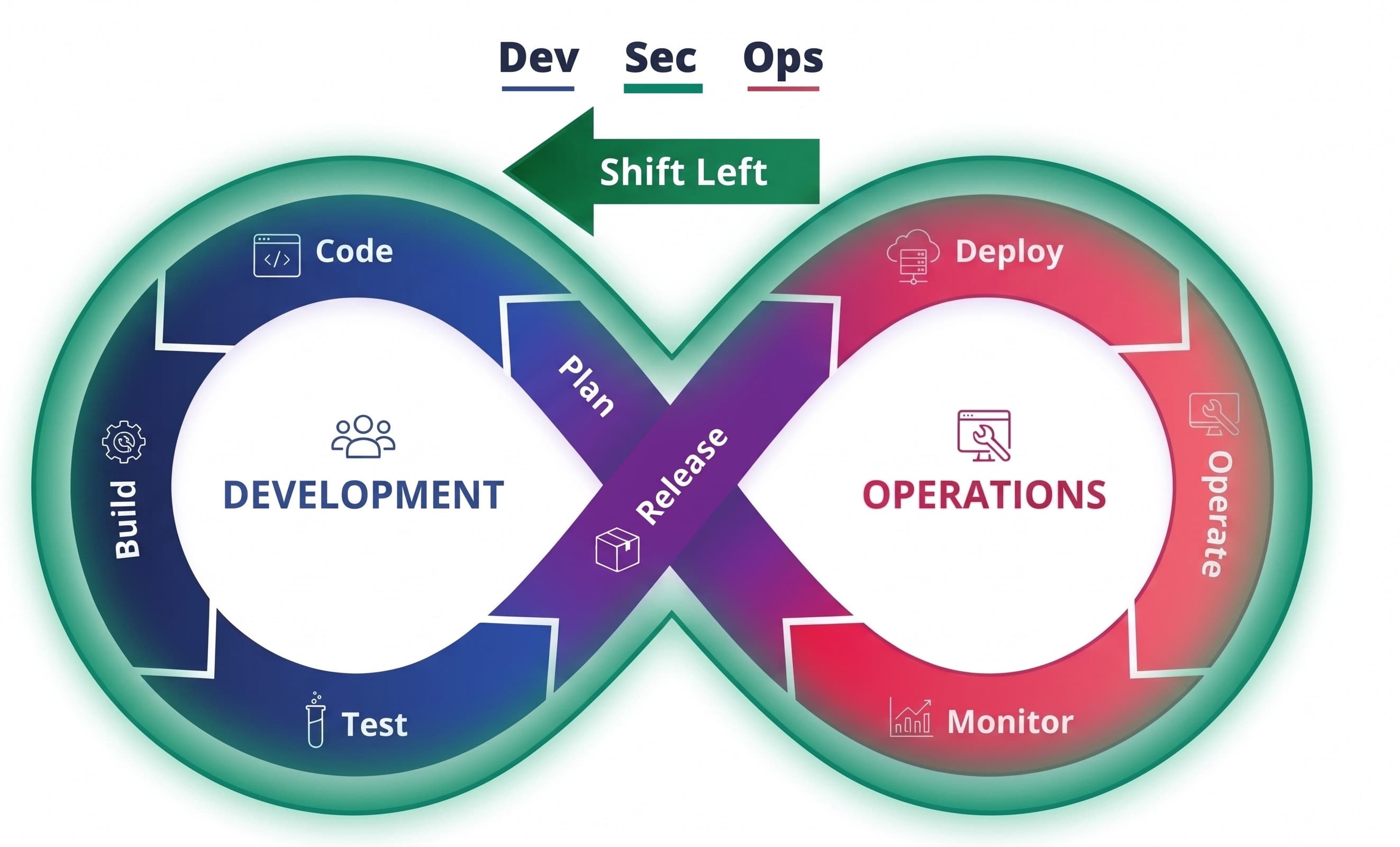
Security is no longer just a security-team concern, but a shared responsibility across the whole team. Using the Shift Left principle, we move security checks as close as possible to the start of development. Instead of costly interventions in production, you identify potential issues continuously during design, coding, code review, and in CI/CD pipelines.

  • Lower cost: fixes in earlier phases are cheaper than production interventions.
  • Improved release quality: fewer security risks reach deployment.
  • Faster feedback: developers identify risk immediately while they work.
DevSecOps Shift Left lifecycle diagram

Training agenda DevSecOps for Developers

1.

Modern approach to application security

Fixing a security issue during development is significantly cheaper than handling the same problem in production. We cover how to reduce risk early and how to choose a balanced level of security effort.

What you will learn:

  • Secure SDLC fundamentals across the full development lifecycle
  • Shift Left practices and shared security ownership in teams
  • Threat modeling methods in practice (for example STRIDE)
2.

AI approach to security in CI/CD

Most repetitive security work can be automated. Well-configured CI/CD processes save engineering time and let teams focus on key business logic.

What you will learn:

  • Set up AI tooling for local security checks
  • Choose CI/CD tooling and automate controls (SAST, DAST, SCA, linters)
  • Use AI for code reviews and reduce missed issues
  • Secure secrets management (SSH keys, API keys, connection strings) in development and CI/CD
  • Practical tips for production security hotfixes
3.

Container and cloud security

Even code that passes all checks can still be exposed by the runtime environment. We focus on real risks in containers and cloud infrastructure, and how to mitigate them.

What you will learn:

  • Security aspects of Docker, Kubernetes, and IaC in development, testing, and production
  • Runtime risks for applications running in containers and outside containers
  • Hardening local and CI/CD environments
  • Finding and fixing vulnerabilities in cloud environments (Azure)

Post-training deliverables:

  • Practical checklist for participants:

    A list of recommendations on how to apply key takeaways in day-to-day practice.

  • Report for manager:

    Identified findings and risks based on interaction with participants.

  • Recommended next steps:

    A concise proposal for follow-up activities and priorities informed by the training.

Choose your training variant

Language
Location
On-site:
1 group (max. 20 participants per group)
Participant seniority

Your technologies:

Example language
Other:
Cloud demos
Other:

How collaboration works

  1. 1.

    Intro meeting

    We discuss your needs, audience seniority, and expectations for the training.

  2. 2.

    Price quote

    We choose the right outline and training format based on your needs and technologies.

  3. 3.

    Training delivery

    Online or on-site, with space for questions and your real-world scenarios.

  4. 4.

    Follow-up

    Recommendations for next steps, including optional mentoring and consulting.

Contact us

We'll respond usually within 24 hours.

Contact us

By submitting the form, you agree to the processing of personal data in accordance with our privacy policy.

Contact Information